 Image 1 of 4
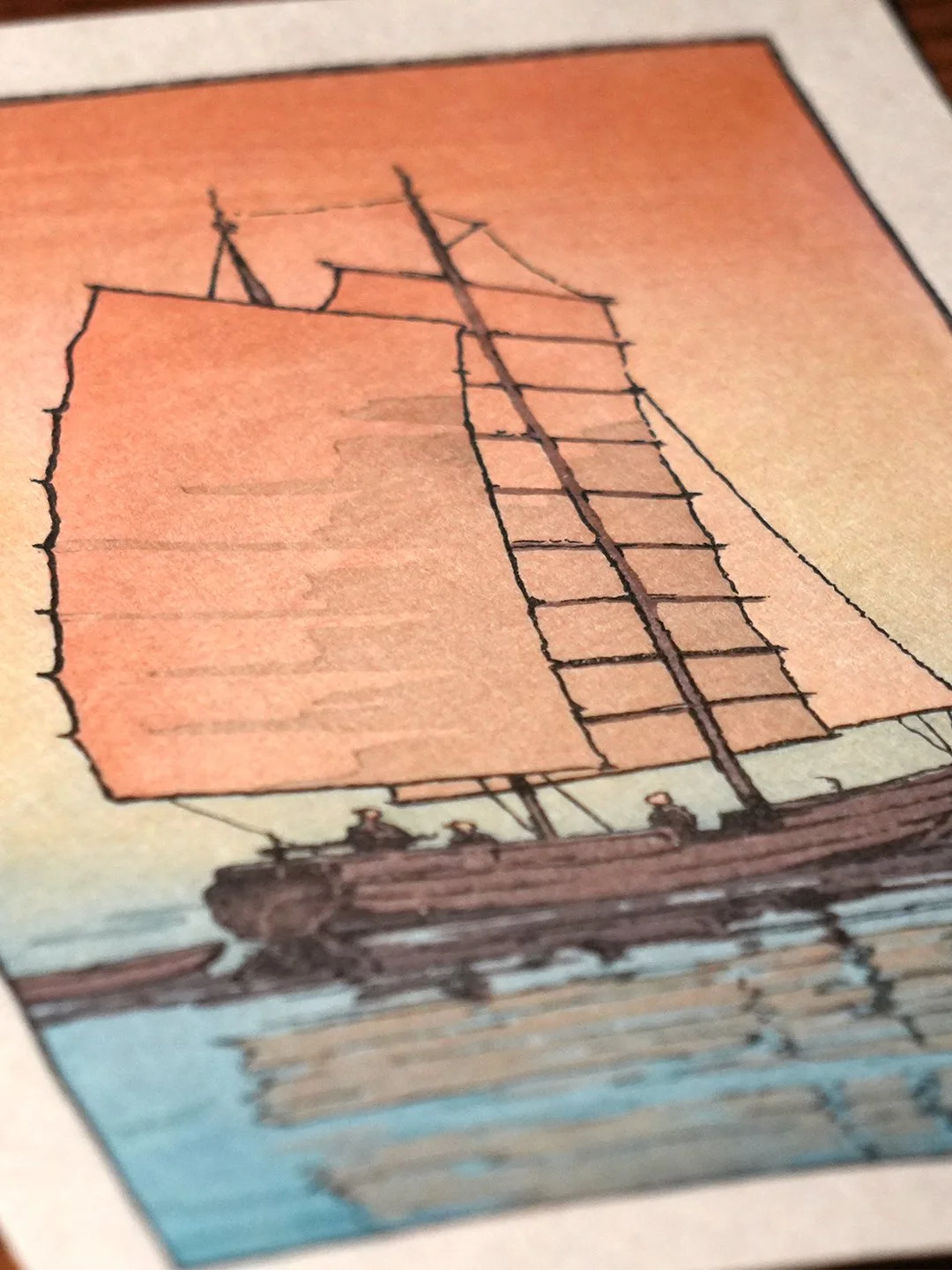 Image 2 of 4
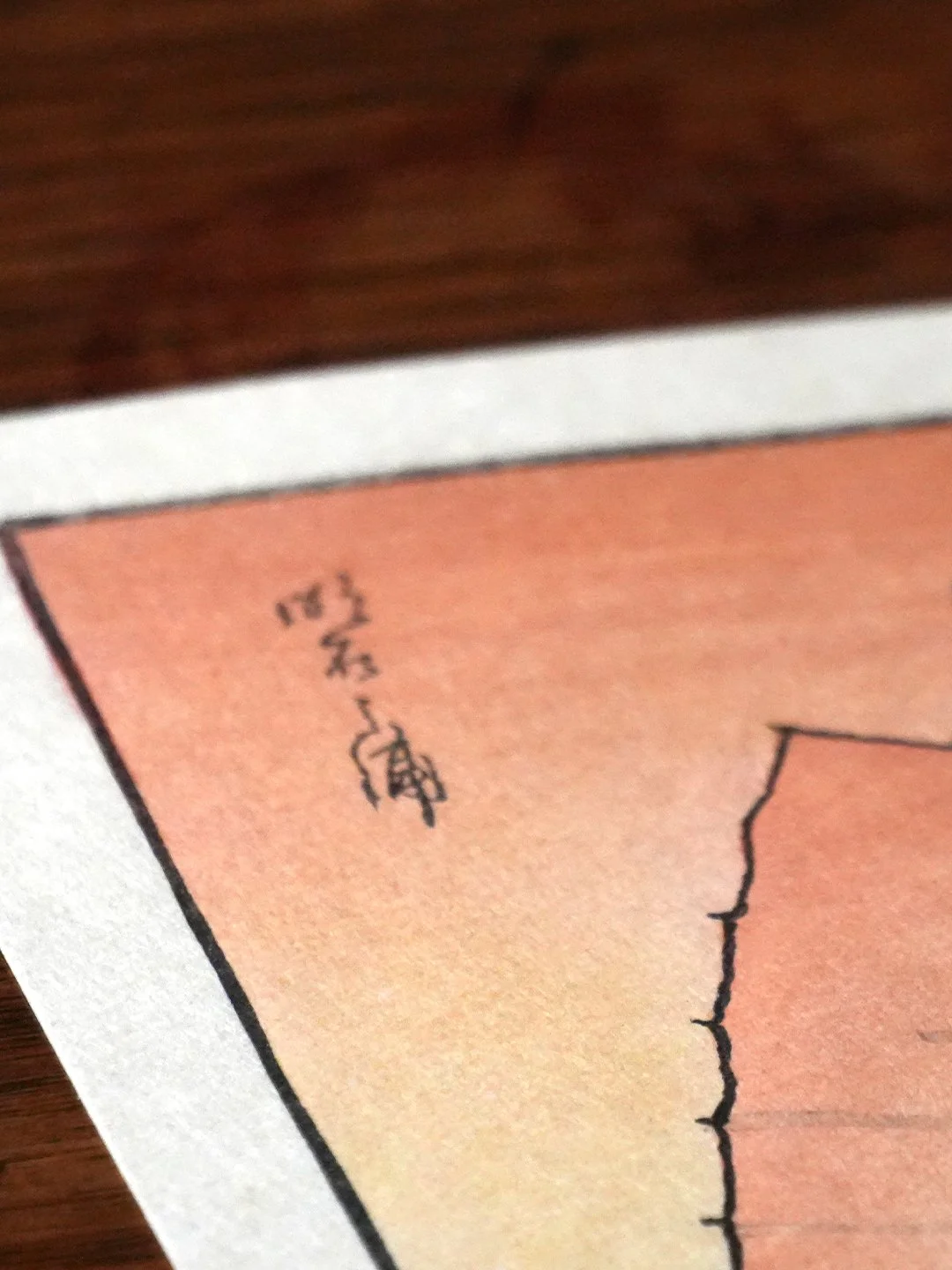 Image 3 of 4
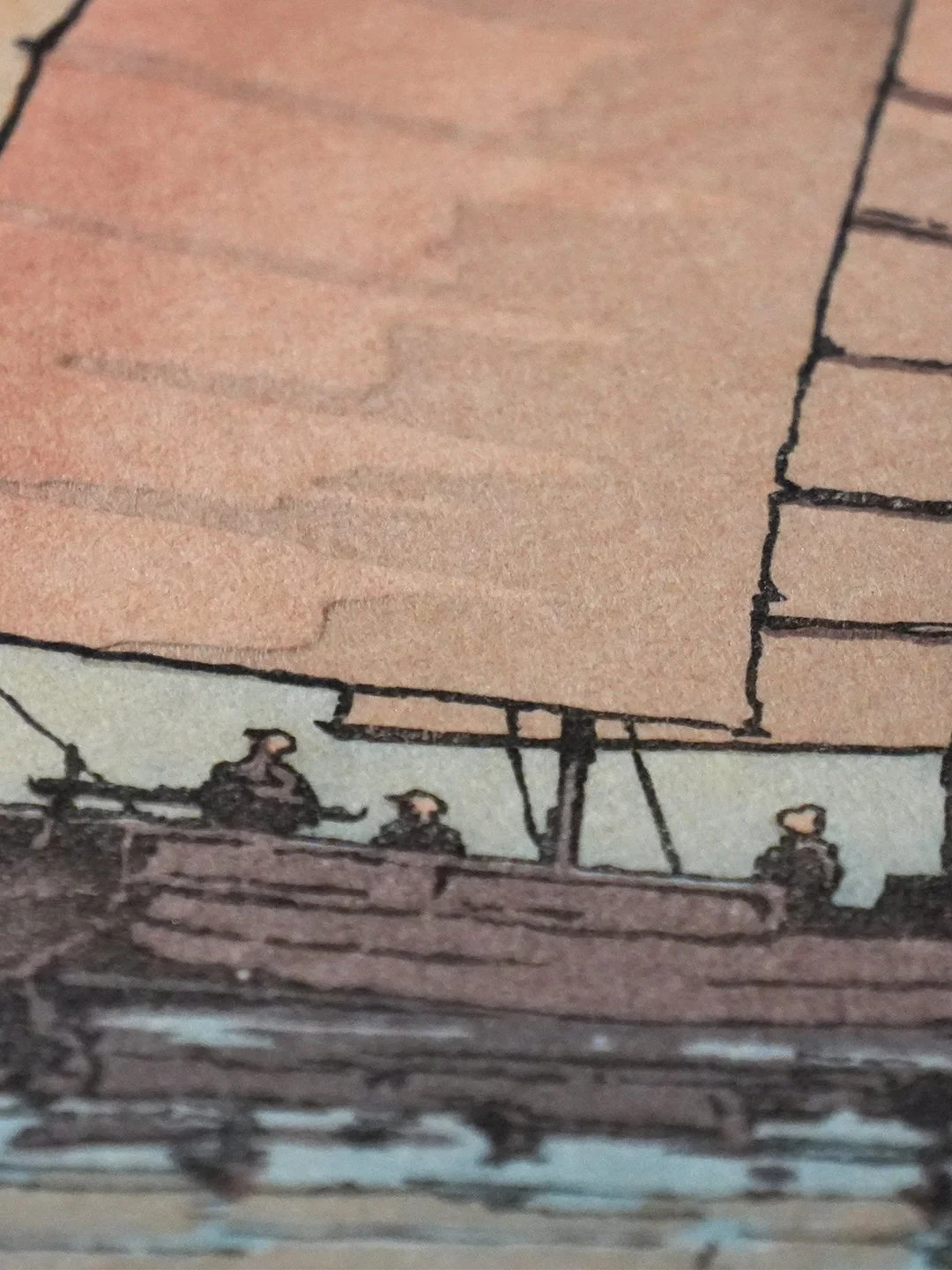 Image 4 of 4
Gradations and dense color overlays; that is what is on the menu today! The last two prints that I have made have been composed of over ten impressions each (averaging around 15 impressions total)! In theory, while this allows me to create more complex prints, it also makes it more difficult to practice the basics of printmaking as a whole. To that end, I wanted to tackle a print design that would allow me ample opportunity to work with and on a multitude of printing skills that have been hitherto lacking.
Enter one of the kings of Shin Hanga, Kawase Hasui. For anyone around the mokuhanga tradtion, they are undoubtedly familiar with the name and the artist! Born in Tokyo in 1883, he came of age as Japan was modernizing at a bewildering pace, yet his work lingered on temple eaves in snow, rain-darkened streets, lonely inns, and moonlit waterways. Associated with the shin-hanga, or "new prints," movement, Hasui helped revive the traditional woodblock print by infusing it with a modern sensibility: atmosphere over drama, solitude over spectacle, weather as emotion.
What makes Hasui feel so enduring is the peculiar hush of his images. Even when they depict well-known places, they seem emptied of noise and vanity, as if the world had briefly stepped aside to let light and season speak. He traveled widely through Japan, sketching scenes that printers and carvers would later help translate into prints of remarkable tonal delicacy. The result is work that can appear simple at first glance but reveals, on longer looking, an almost novelistic attention to mood. In Hasui's hands, a roadside after snowfall or a lantern's reflection in wet evening streets becomes not just a view but a state of mind.
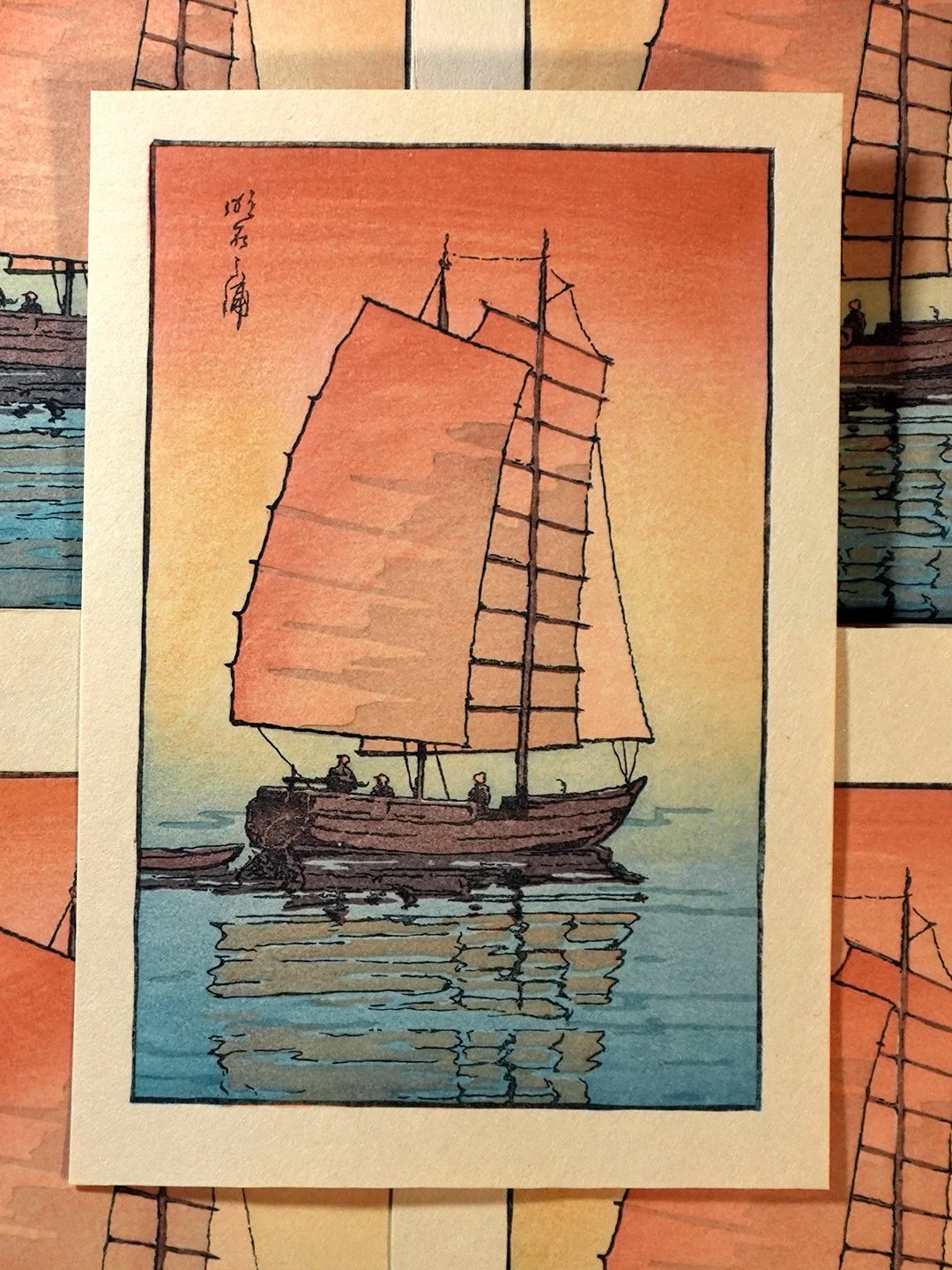
Now for this print, we did not attempt to tackle one of Hasui’s dense 40 plus impression prints. Instead, the Shin hanga publishers of the day provided no shortage of postcard sized prints to work from in a reduced format. That is where we find this particular design!
In total the print is composed of 10 impressions carved in cherrywood and printed on handmade washii.
I hope you will enjoy this print for may years to come!
Gradations and dense color overlays; that is what is on the menu today! The last two prints that I have made have been composed of over ten impressions each (averaging around 15 impressions total)! In theory, while this allows me to create more complex prints, it also makes it more difficult to practice the basics of printmaking as a whole. To that end, I wanted to tackle a print design that would allow me ample opportunity to work with and on a multitude of printing skills that have been hitherto lacking.
Enter one of the kings of Shin Hanga, Kawase Hasui. For anyone around the mokuhanga tradtion, they are undoubtedly familiar with the name and the artist! Born in Tokyo in 1883, he came of age as Japan was modernizing at a bewildering pace, yet his work lingered on temple eaves in snow, rain-darkened streets, lonely inns, and moonlit waterways. Associated with the shin-hanga, or "new prints," movement, Hasui helped revive the traditional woodblock print by infusing it with a modern sensibility: atmosphere over drama, solitude over spectacle, weather as emotion.
What makes Hasui feel so enduring is the peculiar hush of his images. Even when they depict well-known places, they seem emptied of noise and vanity, as if the world had briefly stepped aside to let light and season speak. He traveled widely through Japan, sketching scenes that printers and carvers would later help translate into prints of remarkable tonal delicacy. The result is work that can appear simple at first glance but reveals, on longer looking, an almost novelistic attention to mood. In Hasui's hands, a roadside after snowfall or a lantern's reflection in wet evening streets becomes not just a view but a state of mind.
Now for this print, we did not attempt to tackle one of Hasui’s dense 40 plus impression prints. Instead, the Shin hanga publishers of the day provided no shortage of postcard sized prints to work from in a reduced format. That is where we find this particular design!
In total the print is composed of 10 impressions carved in cherrywood and printed on handmade washii.
I hope you will enjoy this print for may years to come!